MORNING
Begin with gratitude
Prayer, Scripture, breakfast and the anticipation of a new day.

LEADER LAND
Imagine worship, shared meals, family connection, mentoring and the joy of serving together at Leader Land.
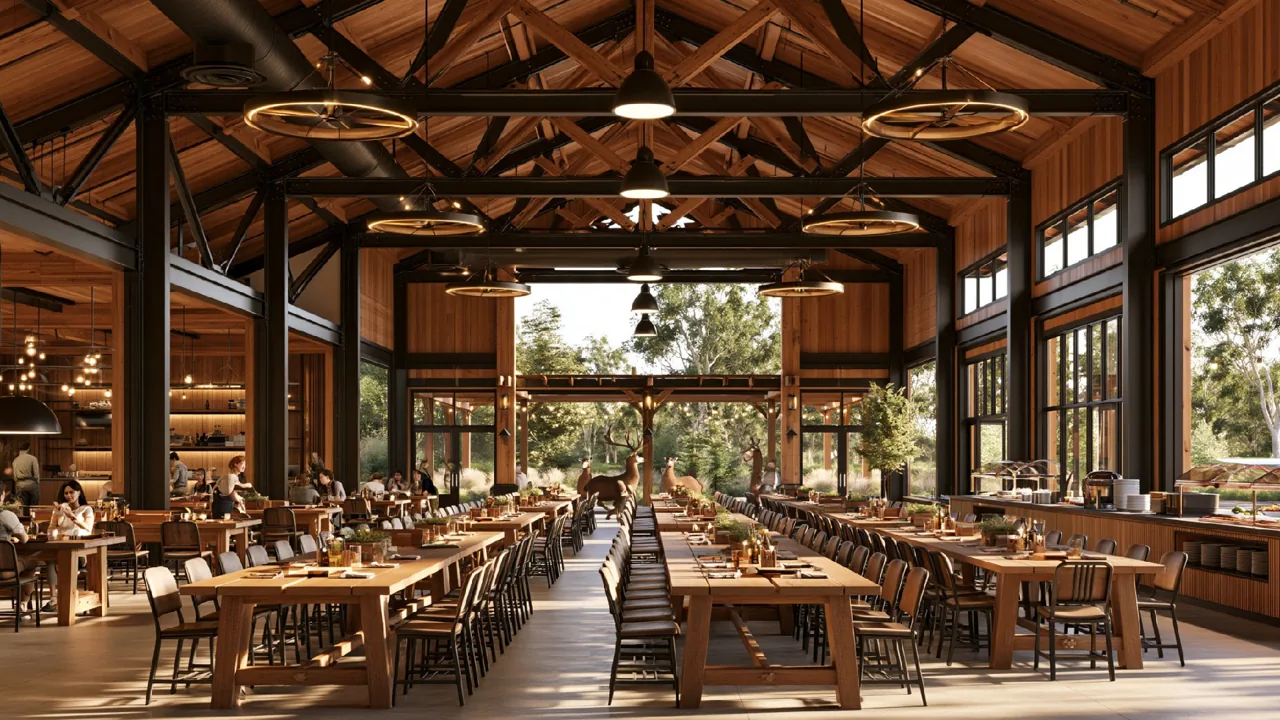
The vision is not only about a powerful gathering. It is also about the spaces between: breakfast before the day begins, a quiet walk, an unhurried conversation, a song shared around the fire. We want hospitality to feel personal and faith to be present in ordinary moments.
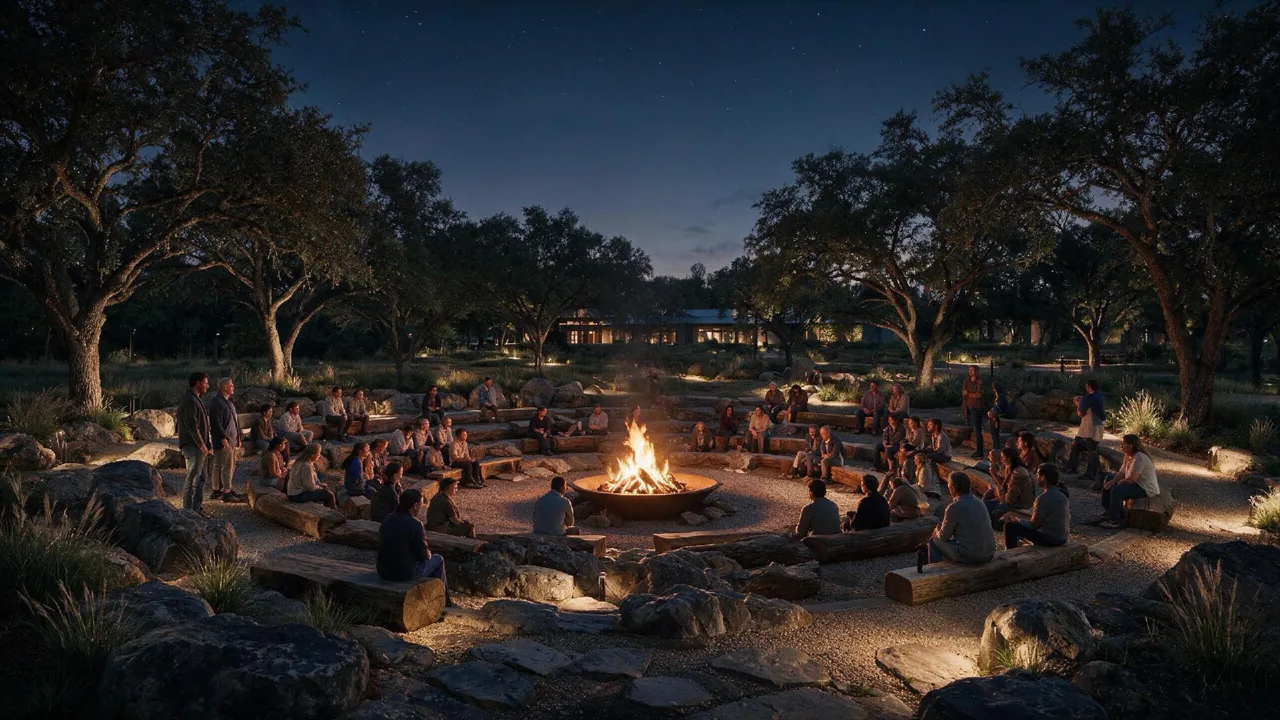 SUPPLIED CONCEPT · NOT BUILT
Prayer, Scripture, breakfast and the anticipation of a new day.
Teaching, age-appropriate activities, teamwork and time in nature.
Shared meals, preaching, singing, worship and meaningful conversation.
Practice the commitments of faith, family and service in everyday life.
Illustrative rhythm for the proposed campus—not an official program itinerary or scheduled event.
Children need safety and wonder. Teens need thoughtful mentoring and clear boundaries. Couples need time and privacy. Families need space to share life. Our proposed program design would honor these different needs rather than treating every guest or age group the same.
The atmosphere we imagine is full of life, but not crowded with noise. There should be room to celebrate and room to recover; time with others and time to be still.
A shared meal is more than an item on the schedule. We imagine generous conversation, hosts who notice someone sitting alone, and a setting where newcomers can feel included. Menus, dietary needs, food handling and service flow would need professional planning. Warm hospitality is both a feeling and a discipline.
For parent–child and family programming, shared activities could create reasons to listen, laugh and encourage each other. A walk, a team task or a simple meal may invite a different conversation than the one that happens at home. Activities must match the specific program’s eligibility, supervision and consent requirements; not every experience is a family event.
Appropriate, supervised service opportunities could help participants practice attention to others. The purpose would not be to replace necessary paid staffing with unprepared guests. It would be to make service tangible: caring for shared spaces, helping with an approved task, or participating in a community project that has a real partner and a defined need.